Cancun Transportation with a Baby Car Seat: A Family Travel Guide
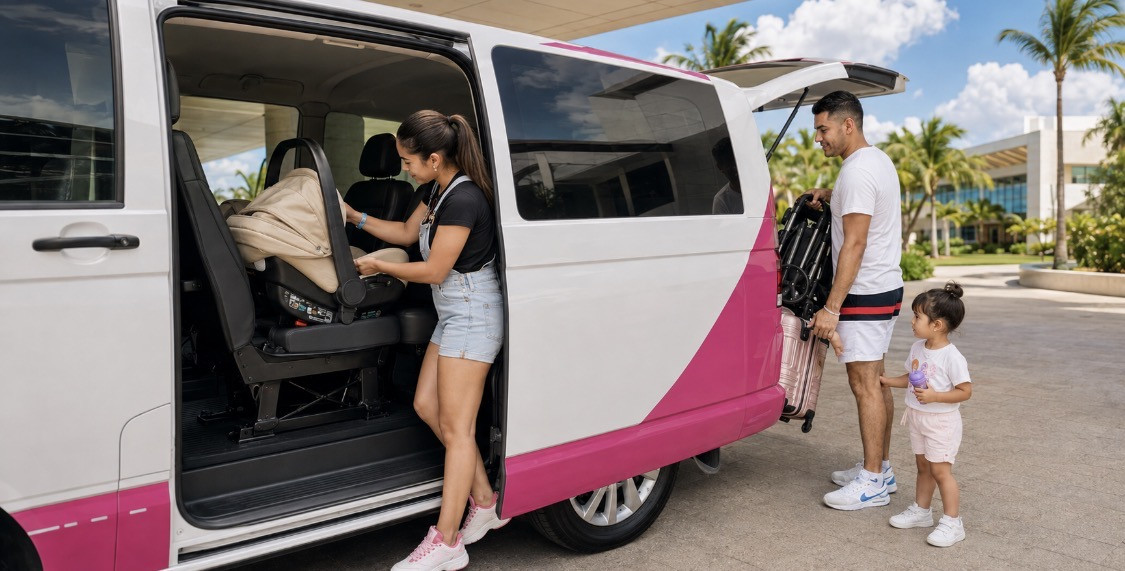
Cancun Transportation with a Baby Car Seat: A Guide
Traveling to Cancun with a baby or young child involves more than choosing a vehicle. Families also need to think about the child's age, weight, height, usual car-seat stage, luggage and the equipment available in the reserved van.
This guide explains how visitors from the United States and Canada can request private Cancun transportation with a baby car seat, what to ask before paying and when bringing a familiar seat may be the better choice.
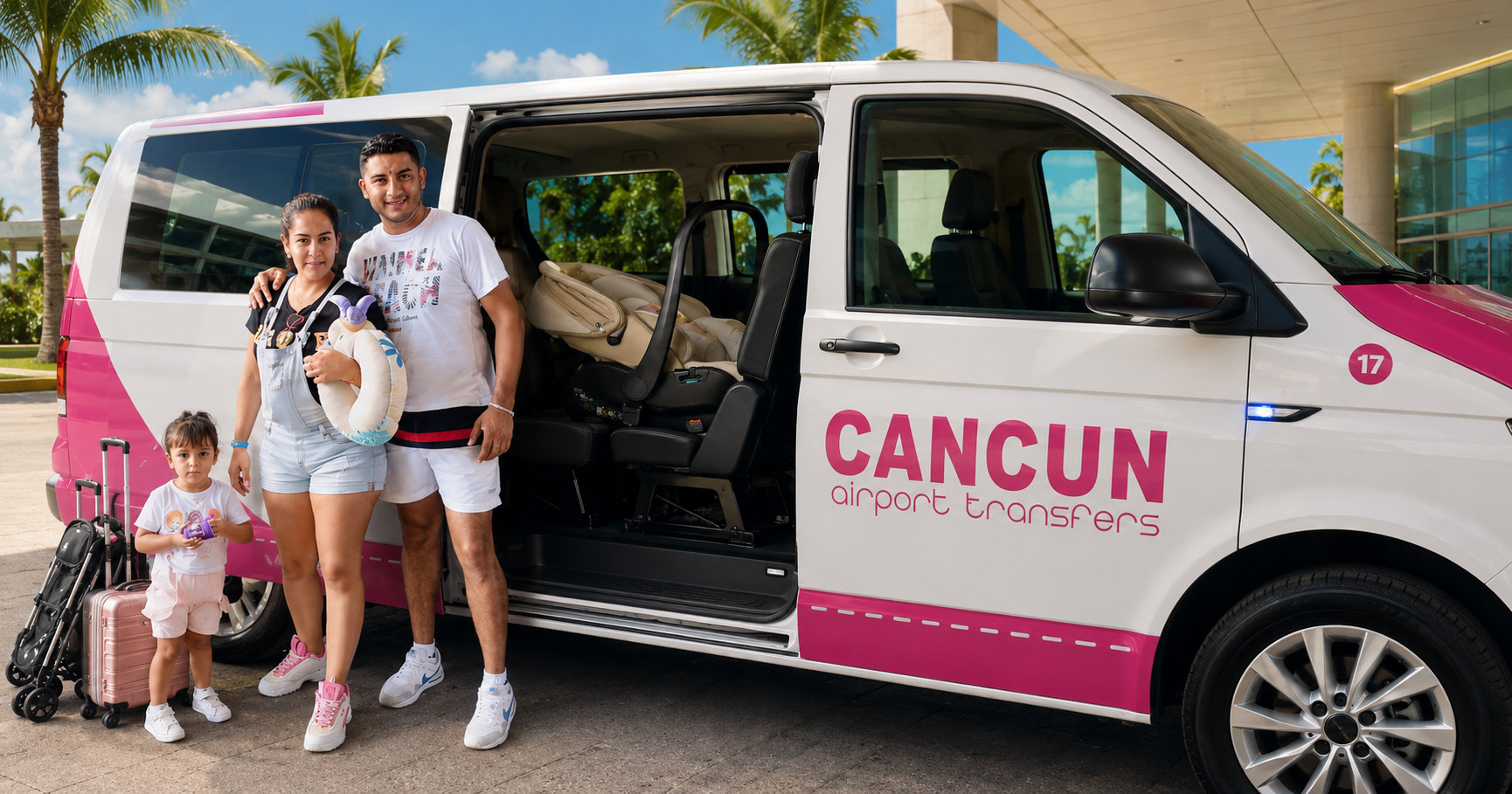
👶 Request the correct child seat before you fly
Send the age, approximate weight and height of each child, along with your flight, resort, passenger and luggage details. Equipment remains subject to advance confirmation.
Request a family quoteWhy should families request a child car seat in Cancun?
Adult seat belts are not designed to fit babies and small children. An age-appropriate restraint supports the child's body and helps distribute crash forces more safely than an adult belt or an adult's arms.
Mexican federal mobility legislation provides that children under twelve, or anyone whose physical size requires it, should ride in rear seats with an appropriate child restraint. Mexican health authorities also recommend using a suitable child restraint and reference approximately 135 centimeters as an important height threshold for proper adult-belt fit.
The World Health Organization reports that correctly used child restraints can substantially reduce deaths and injuries. Having a seat in the vehicle is only part of the process: the restraint must match the child, be compatible with the vehicle and be installed according to its instructions.
Important: a baby should never ride loose or in an adult's arms. Request the appropriate restraint before travel and obtain written confirmation that it has been added to your booking.
Understanding the main child car-seat stages
Names and certification labels can differ between the United States, Canada and Mexico. Age alone is not enough to select a seat. Always consider the manufacturer's weight and height limits, permitted direction and installation instructions.
| Restraint stage | General use | What to confirm |
|---|---|---|
| Rear-facing infant seat | Babies within the seat's published limits | Weight, height, recline and installation |
| Convertible car seat | May allow rear-facing and later forward-facing use | Available mode and manufacturer limits |
| Forward-facing seat with harness | Children who have outgrown rear-facing limits | Harness fit, weight and height range |
| Belt-positioning booster | Older children who outgrew a harness but do not fit the adult belt | Lap-and-shoulder belt fit |
Rear-facing travel should continue for as long as the child remains within the restraint's rear-facing height and weight limits. Moving to another stage should be based on those limits and proper fit, not only on a birthday.
What information should you provide for each child?
Include the following details when requesting family transportation:
- Age in years and months.
- Approximate weight in pounds or kilograms.
- Approximate height in inches/feet or centimeters.
- The type of restraint the child normally uses at home.
- Whether the child still rides rear-facing.
- Any mobility, positioning or medical support needs.
When two or more children are traveling, provide separate information for each one. A baby, preschooler and older child may require three different restraint stages even though they are part of the same reservation.
✈️ Traveling with more than one child?
Tell us the age, weight and height of each child and how many seats you need. Include all adults, bags, strollers and travel cribs in the request.
Confirm child seatsInstallation and vehicle compatibility
U.S. parents may know lower anchors as LATCH, while Canadian families often use the term UAS. A vehicle in Mexico may use ISOFIX terminology or may secure the restraint with a seat belt. A correctly routed seat belt can be an approved installation method when the seat and vehicle instructions allow it.
Before booking, ask the provider to confirm:
- The general restraint type assigned to each child.
- Whether rear-facing installation is available.
- The restraint's published weight and height range.
- Whether it installs with a vehicle belt or compatible anchor system.
- How many child restraints can be installed in the reserved vehicle.
- Who installs or checks the seat before departure.
- Whether the request applies to both arrival and return rides.
Inspect the setup before leaving
Parents and guardians should participate in the final check. Look for visible damage, verify that the restraint is firmly installed and adjust the harness to the child according to the seat instructions. Do not begin the trip if the requested setup is missing or clearly unsuitable.
Should you bring your own car seat or request one?
| Consideration | Bring your own | Request a seat |
|---|---|---|
| Familiarity | You know its history, fit and use | You must inspect the assigned restraint |
| Air travel | Adds an item to your flight | No seat to carry through the airport |
| Vehicle compatibility | Must fit the reserved vehicle | Must be confirmed by the provider |
| Availability | Travels with you | Subject to advance confirmation |
Bringing your own seat may be preferable for a newborn, a child with special positioning needs or a family that wants a known restraint history. Requesting a seat can reduce airport luggage, but it requires accurate child information and written confirmation.
Practical advice for U.S. and Canadian families
Check with your airline before flying with a car seat
Airline policies can differ for cabin use, checked items and gate checking. Confirm the current rules directly with your airline, including any certification label required for use on board. A seat accepted by an airline is not automatically guaranteed to fit every ground-transport vehicle.
Confirm USD, CAD or Mexican pesos
Ask which currency appears in the transportation quote and which currency will be charged. Canadian travelers should not assume a dollar symbol means Canadian dollars. Your card issuer may apply an exchange rate or foreign-transaction fee.
Save the booking offline
Keep the child-seat request, meeting instructions and assistance number available without internet access. Make sure at least one adult can use roaming, an eSIM or airport Wi-Fi after landing.
Request the seat for every required ride
A seat added to the airport arrival is not necessarily included in a later hotel-to-hotel ride or return transfer. Verify every service date and route in the written confirmation.
Strollers, travel cribs and vehicle capacity
A small family can still require a larger vehicle. Checked bags, carry-ons, diaper bags, full-size strollers, travel cribs and personal car seats all use space. Every child restraint also occupies a passenger seating position.
Include these items in the quote request:
- Total adults, children and infants.
- Checked suitcases and carry-on bags.
- Compact or full-size strollers.
- Travel cribs and other oversized family equipment.
- Personal car seats you will bring.
Choosing capacity for passengers and luggage together helps keep loose objects away from children and ensures that each restraint can use an appropriate seat.
Family transfers from Cancun International Airport
Travel times are estimates and may change because of traffic, roadwork, weather, season and the property's exact location.
| Destination | Approximate time | Family detail to confirm |
|---|---|---|
| Downtown Cancun | 20–30 minutes | Complete address |
| Cancun Hotel Zone | 20–40 minutes | Exact resort name |
| Costa Mujeres | 40–60 minutes | Lobby and resort access |
| Puerto Morelos | 25–40 minutes | Town or resort corridor |
| Playa del Carmen | 50–70 minutes | Resort or rental address |
| Tulum | 90–130 minutes | Downtown, beach or hotel zone |
Quick family checklist before leaving the airport
- Confirm that every requested child seat is in the vehicle.
- Inspect the restraint for visible damage or missing parts.
- Check the installation and harness fit.
- Place bags and stroller in the designated luggage area.
- Keep loose objects away from the child.
- Confirm the resort and route with the driver.
- Save the assistance contact for your return ride.
Frequently asked questions
Is a baby car seat automatically included?
Not necessarily. Request it when booking, provide the child's details and wait for written confirmation of availability.
Can I request more than one child restraint?
Yes, subject to availability. Provide the age, weight and height of each child because different restraint stages may be needed.
Can the seat be installed rear-facing?
It depends on the available restraint, its manufacturer limits and vehicle compatibility. Confirm rear-facing use explicitly before travel.
Can I use my own car seat in the transfer?
Yes, after confirming compatibility with the reserved vehicle. Include it in the luggage and seating information.
Is a booster appropriate for a baby?
No. A booster is for an older child who has outgrown a harnessed seat but still does not fit the adult lap-and-shoulder belt correctly.
Can I hold my baby during the ride?
That is not a safe alternative. The child should ride secured in an appropriate restraint for their size and developmental stage.
Does the car seat count as a passenger space?
Yes. The restraint is installed on a vehicle seat, and the child must be included in the total passenger count.
Can I book a car seat for the return to the airport?
Yes. Make sure every requested restraint appears on both the arrival and return services in your confirmation.
Arrange your family transfer before flying
Cancun Airport Transfers provides private family transportation to Cancun, Costa Mujeres, Puerto Morelos, Playa del Carmen, Akumal, Tulum and other Mexican Caribbean destinations.
Book family transportationSafety references: Mexico's Ministry of Health, Mexico's General Mobility and Road Safety Law, World Health Organization and American Academy of Pediatrics.